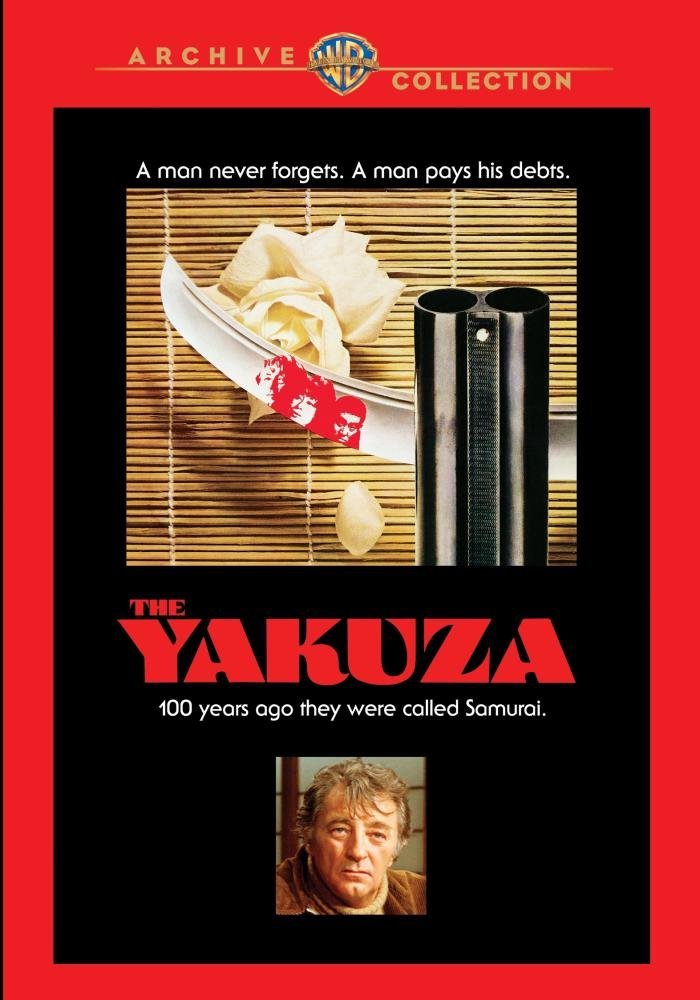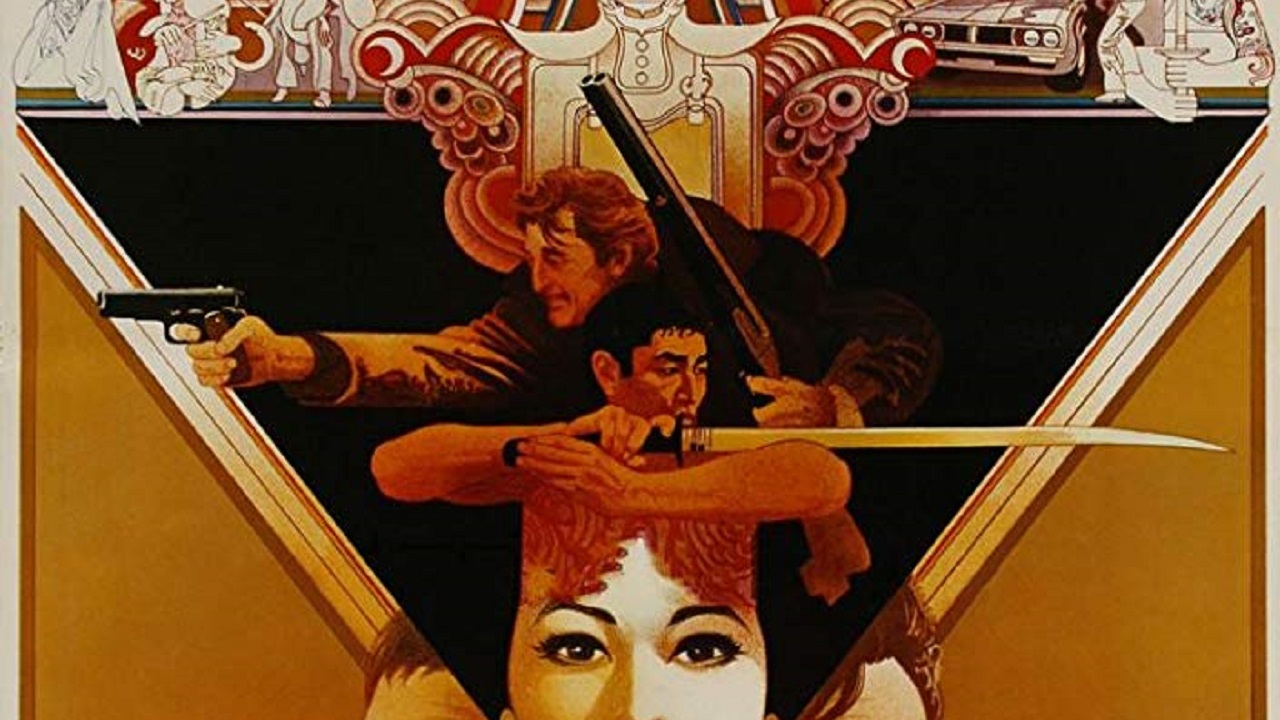
Our journey through the works of Paul Schrader begins with his first feature film credit: 1974’s The Yakuza, directed by Sydney Pollack.
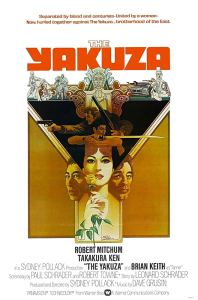
The Yakuza is a somewhat forgotten piece of the ’70s exploitation film puzzle. It almost doesn’t even fit that puzzle. Pollack’s directorial style feels more restrained and formalist than the cheap grindhouse fare of the time, which seems to be what Schrader originally intended. If the same film were released today, it might look like halfway misguided Oscar bait.
Paul Schrader’s brother, Leonard, lived in Japan teaching English during the height of the Vietnam War. Immersing himself in the local nightlife, Leonard had become acquainted with actual members of the yakuza. These encounters sparked his interest and provided the basis for the story, initially conceived as a novel before Paul convinced him it would make a better movie.
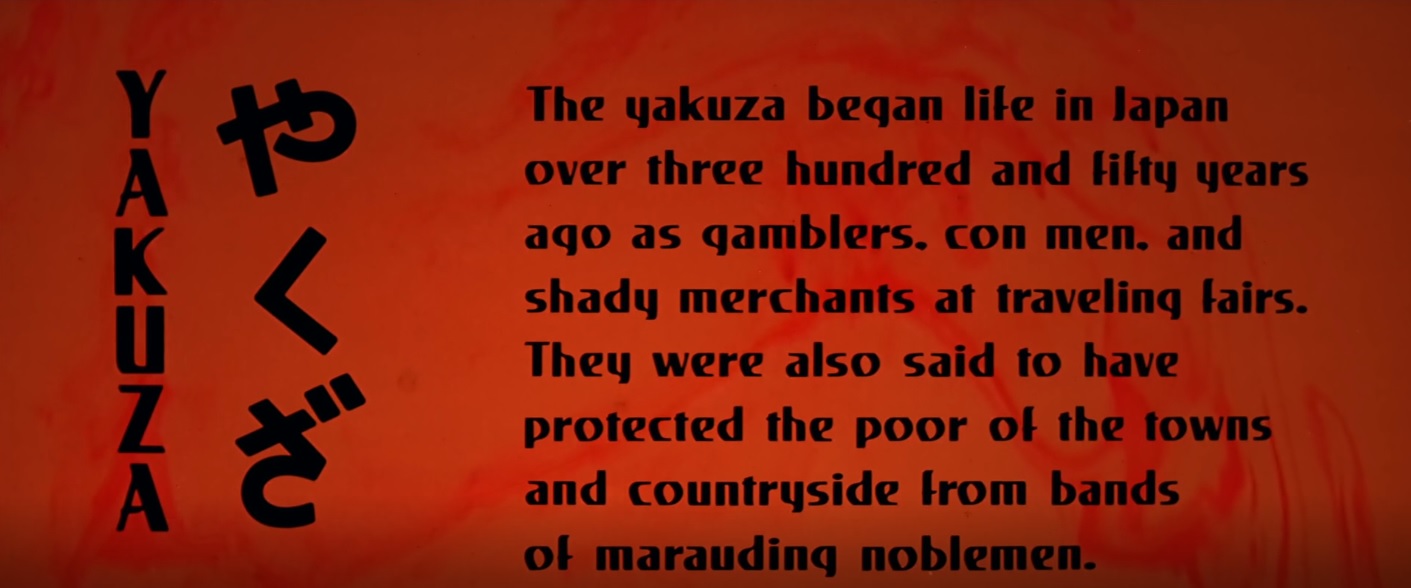
This is the first major Japanese crime film produced by an American studio, and as such features heavy doses of exposition for American audiences who may well not even know what a yakuza is. Much of this information is related in a text crawl during the opening credits.
The plot involves Robert Mitchum as Harry Kilmer, a retired detective sent to Japan to help rescue a friend’s daughter from the Yakuza. His friend, Tanner (Brian Keith), has botched a weapons transaction with a Yakuza boss, who now demands retribution. Kilmer, once deployed to Japan during the post-WWII occupation, returns decades later to find the woman he loved, Eiko (Keiko Kishi), and her daughter, Hanako (Christina Kokubo), doing well for themselves. Ken (Ken Takakura), a relative of Eiko’s, is not pleased with Kilmer’s return, but feels honor-bound to assist him in his mission. Together, the two tangle with the local Yakuza to clear Tanner’s name and rescue his daughter, but naturally, things aren’t as simple as they seem.
As a genre, the yakuza film was still relatively young by 1974, having sprung up in the mid-1960s as a more up-to-date evolution of the classic jidae-geki samurai films. The popularity of Francis Ford Coppola’s The Godfather (1972) led Japanese studios to modernize yakuza films even further by giving them as contemporary a look and feel as possible. Schrader, then, almost literally pitched this film as “Godfather meets Bruce Lee.”
The film’s journey from concept to screen was riddled with studio in-fighting from the start. Schrader and his agent stoked a fierce bidding war for the script, which eventually landed at Warner Bros, whose $325,000 purchase made it the most expensive script ever purchased at the time. Robert Aldrich was slated to direct with Lee Marvin in the starring role, but Marvin asked for too much money and he was soon dismissed. He was replaced by Robert Mitchum, who insisted on working with Sydney Pollack, also forcing Aldrich out of the picture. After a rewrite from Chinatown scribe Robert Towne, The Yakuza went into production with Pollack directing.
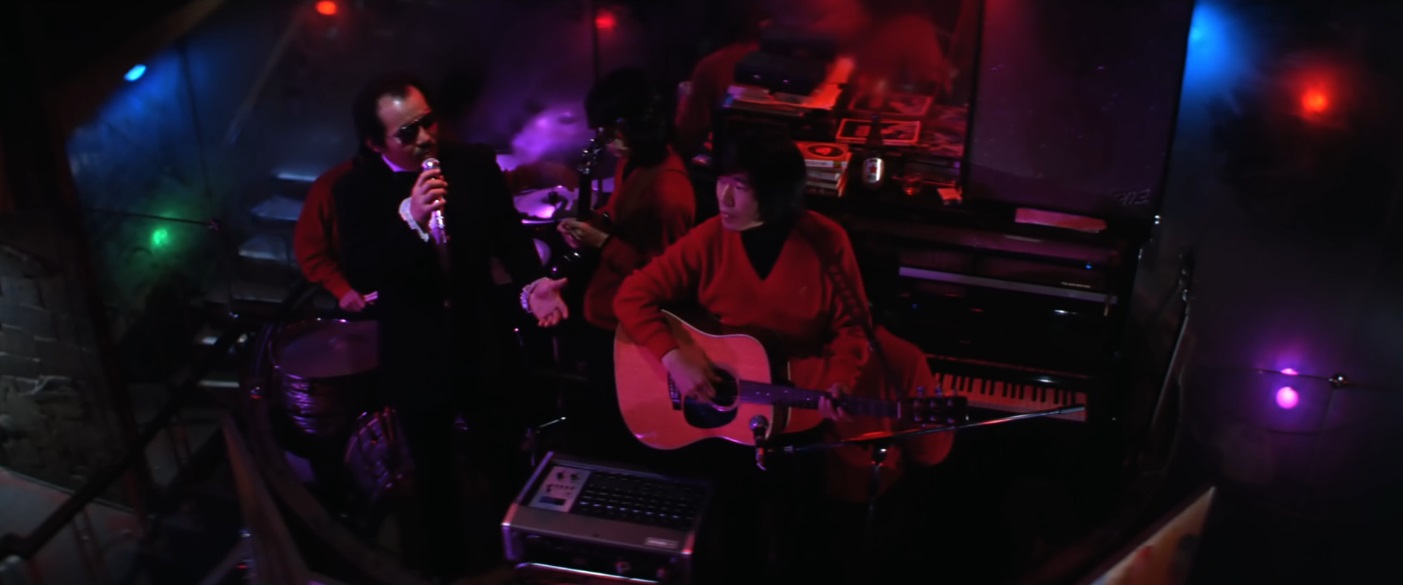
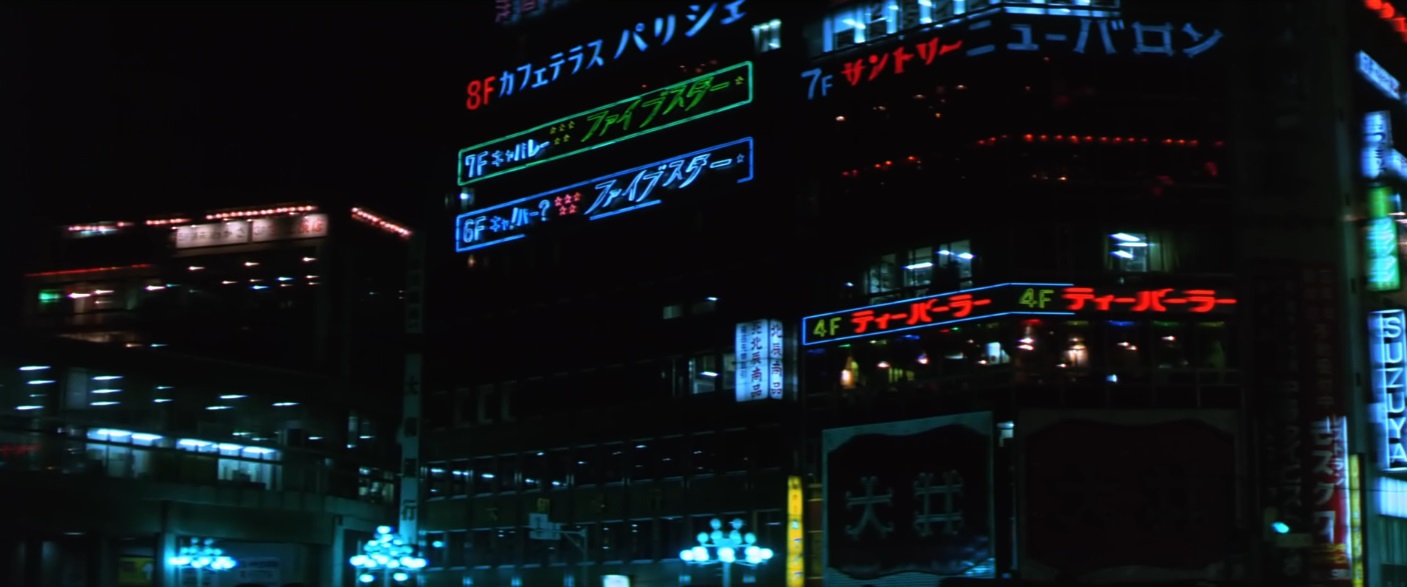
Pollack’s finished film is a fascinating beast. On its face, it’s beautifully reverent of Japanese culture and customs. It’s a little too reverential at times, as there are many scenes where characters do nothing but stand around and explain these customs to uninitiated American characters. Still other sequences give us the full breadth of a setting, letting us take in the ambiance of modern Japanese nightlife, a far cry from the centuries-old traditions embedded in the plot. The more things change, the more they stay the same, right?
The way Schrader tells it, Pollack soon fired him after butting heads over the tone of the script. According to Pollack, Paul Schrader pushed for the film to be increasingly violent. Schrader, a former film critic himself, was intimately familiar with the yakuza film genre, and wanted this film to stand alongside them as well as any American production could. Pollack, however, rejected violence that wasn’t in direct service to the story. Once Schrader’s hands were off the project, the film was largely shaped by the trio of Pollack, Mitchum and Towne. Where one draws the line between a studio meddling with a filmmaker’s vision and other filmmakers simply working with what they’re given is debatable. This being Schrader’s first major screenplay, though, it’s unlikely he had much sway over how the film was produced anyway.
That push and pull between violence and reverence leads The Yakuza to feel downright ponderous by today’s standards. When violence does break out, it’s sudden and gruesome. The poster (as well as the cover for Warner Archive’s blu-ray edition) promises a clash between the old and the new; the katana vs the shotgun. The film does eventually deliver on that promise, and the climactic battle where Kilmer and Ken raid a yakuza den is thrilling. Ken, a former yakuza himself, slashes through mob goons while Kilmer blasts away with his shotgun. For a brief shining moment, the film achieves the pulp trashiness that Paul Schrader seemed to be looking for.
Despite a tone that’s constantly pulling itself one way and then the other, there is plenty to appreciate in this film. Kilmer’s return to Japan after thirty-some years is portrayed with tinges of sadness and regret, but also a little bit of wonder. The Tokyo that Kilmer returns to has risen from the ashes of World War II to become one of the premier cities of the modern age, and the film takes its time drinking in all the sights and sounds. It’s beautiful in its own way.
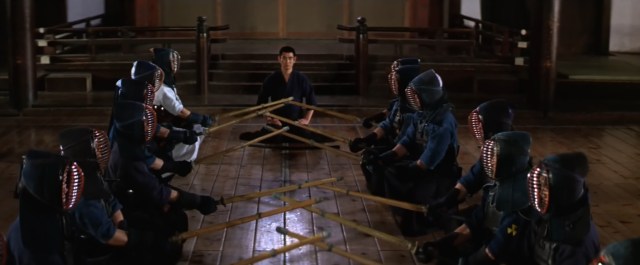
In our introduction to Ken, we find him instructing a kendo class. Ken is dressing down one of his combat students for trying to anticipate a strike. He tells the man one should never expect to win, nor should one expect to lose. One should always expect nothing. This feels like the best way to watch the film, as well. Going in expecting an action yarn will end in disappointment. At the same time, expecting the Godfather-esque crime saga Schrader had promised is asking far too much from this production. Tempered expectations and an open mind; that’s the best way to engage with The Yakuza.
FINAL RATING
3.5 stars (out of five)
NEXT TIME: Taxi Driver (1976)