
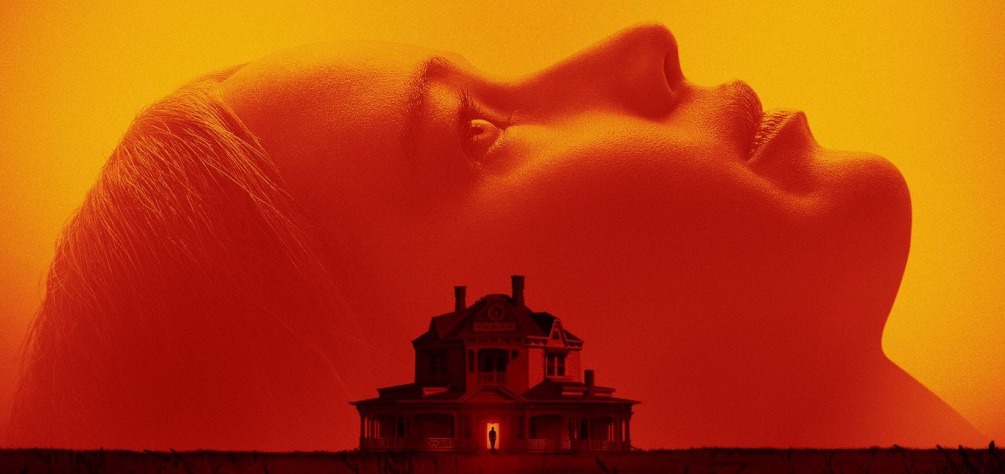
Originally published September 20, 2017 on FrontRowCentral.com
When you get in line for a Darren Aronofsky film, you know you’re in for a particular experience. He’s never shied away from the horrors of the ordinary, which make films like Requiem for a Dream and The Wrestler so emotionally grueling. Even his flights of fancy aren’t immune to that kind of brutality. For all its overblown CGI spectacle, Noah is a Gustave Dore painting come to life in all its terrible majesty. And with a number of critical and financial successes under his belt, Aronofsky has earned enough clout to make whatever he wants for a change.
Which brings us to mother!
This is a difficult film to discuss in a conventional review for a couple of reasons. Primarily, so much of what makes the film work is tied to its final act, which makes discussing it in any meaningful fashion complicated. The trailers have done an exceptional job at hiding some of the film’s more explicit metaphorical content (for better or for worse, as audiences have been staying away in droves). Meanwhile, the tenor of the conversation surrounding the film has turned toward questioning what it takes to even understand movies, which is nothing short of bizarre. Mother!’s advertising paints it as a horror film, evoking Hitchcock and Polanski in equal measure. There is a horror vibe to this, but not in any conventional sense.
Normally I wouldn’t worry about spoilers, but realizing what this film was hit me on such a visceral level that it splattered my brains against the back of the theater. I’d urge you to skip the rest of this review and just see the film already, though it’s entirely possible that you’ve either seen or read up on it anyway. So at this point, I’m going to render my final judgement, and if you feel like joining me below, then let’s do this thing.
Mother! finds Darren Aronofsky exorcising some of his spiritual demons in a cinematic tone poem that is in turns confounding and disturbing. It’s probably the clearest look yet inside this director’s mind. Your feelings on religion will no doubt color your impression of this film, but if you’re willing to make the journey, you’ll no doubt find it enormously satisfying. Fans of Aronofsky’s work should need no convincing to check this one out in theaters while they have the chance.
***SPOILERS AHEAD IF YOU CARE ABOUT THAT***
The film opens on a farmhouse in an idyllic pasture occupied by a husband and wife. The husband (Javier Bardem) is an acclaimed author struggling to pen his next work. Meanwhile his wife, the titular Mother (Jennifer Lawrence), spends her time painting and restoring their home. Unwelcome guests begin arriving at the house, claiming to be fans of the husband’s work. First we meet a dying man (Ed Harris) and his wife (Michelle Pfieffer), then their two sons (Domhnall & Brian Gleeson), and later various other friends and hangers-on. He welcomes all of these people with open arms, sharing his home and his possessions. As the number of occupants begins to escalate, it all becomes too much for Mother to bear. She has to periodically suppress violent tremors until she can’t take it anymore and explodes in a rage.
Mother! employs a dreamlike logic as it transitions from scene to scene. Characters emerge and disappear seemingly at random; rooms seem to shift and expand on a whim. The camera flows through the house, always following close behind Mother to capture her reactions to this increasingly confusing series of events. It’s all purposeful, of course; a film this lyrical and obtuse doesn’t just happen by accident. As waves of people flood the house, it turns from a mere annoyance on a sunny day to a living nightmare bathed in darkness, and the feeling of so many faces in the frame at once becomes downright oppressive.
After a certain point, though, the game Aronofsky is playing becomes evident. Mother! tells the story of a straining relationship, using the Bible as its narrative template. Adam and Eve, Cain and Abel, the flood, the New Testament, the end of days, etc.; all of these serve as the backdrop for vignettes involving Mother and her husband. The film plays fast and loose with the imagery and the iconography, but once that revelation dawns on the audience*, the film shifts into overdrive and plows headfirst into a diatribe on the evils that humanity has wrought in the name of organized religion.
It’s an unforgiving portrait of how Aronofsky apparently feels about Christianity, but the relationship between Mother and Him (as he’s listed in the credits) could just as easily be any relationship. That relationship exists between the man and his wife just as it exists between the artist and their audience, just as it exists between God and his creation. You can read it however you like, but the fact that Aronofsky zeroes in on religion in particular opens up some unique pathways for discussion. For example, in one scene houseguests begin grabbing everything that’s not nailed down. Mother tries to stop one woman from making off with her pottery, to which the woman responds something to the effect of, “But HE said ‘What’s mine is yours!’ So gimme!” Everybody wants something, which leads to people ripping up the carpet and smashing through walls just to get a piece of what he promised. Seen from Mother’s perspective, it’s a horrifying sequence. It plays out like an indictment against Jesus’s tacit endorsement of communism.
This continues to build until the finale, which can only be described as apocalyptic. It’s a strangely cathartic ending, not only because it’s a release from some truly shocking imagery, but also because of how satisfying it is for a filmmaker see their views on religion teased out as far as they could take them. Too often films about religion soft-pedal their message or imagery for fear of alienating the more faithful in the audience. How we feel about religion is a deeply personal, and everyone’s relationship with God (or a lack thereof) is different. Some are comfortable in their faith, while others find those thoughts to be a constant struggle. For a filmmaker like Aronofsky to play in that sandbox, and for a major studio to give him the freedom to come to his own conclusions, audiences be damned, is a fascinating thing. Not only is it a welcome sight, but in this case it makes for a bracing, exquisite piece of filmmaking.
*Or at least on this dummy right here.

Archive.org’s Wayback Machine had no record of this review, so it’s been recreated from my original draft.

Leave a comment