
Originally published May 1, 2016 on FrontRowCentral.com
As an institution in the world of entertainment, director Garry Marshall has become sort of like that one old, racist war veteran uncle that every family just sort of agrees to put up with. We love and respect you for fighting in The War — or in this case creating Happy Days — but that was a long time ago. Mother’s Day, Marshall’s third holiday-themed ensemble rom-com in the vein of Love Actually, is a frantic, scatterbrained attempt to jerk tears and dollars out of audiences by appealing to one of the things we all have in common: Our moms.
Now, trying to explain the tangled web of failed sitcom pilots that is Mother’s Day is an exercise in madness. Much like Marshall’s previous holiday jaunts, Valentine’s Day and New Year’s Eve, this film follows a handful of vaguely-connected stories involving various mothers and/or people related to them as the film’s namesake holiday approaches. Strap in, because shit’s about to get nutty.
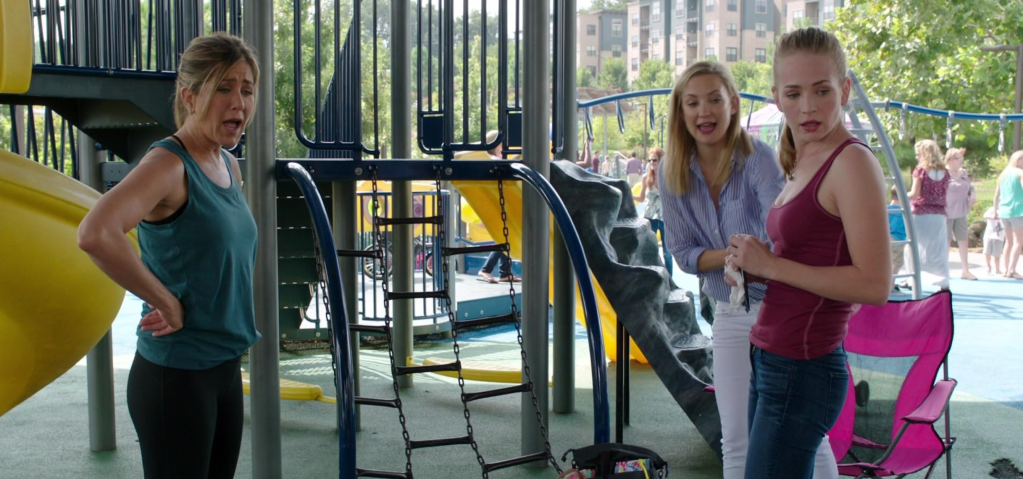
The film opens as Henry (Timothy Olyphant) informs his ex-wife Sandy (Jennifer Aniston) that he’s just married a young 20-something named Tina (Shay Mitchell), who is extremely gung-ho about being a cool stepmom to Sandy’s two boys. This sends Sandy into a spiral of despair as she fears she’s about to spend Mother’s Day alone. Meanwhile, sisters Jesse (Kate Hudson) and Gabi (Sarah Chalke) get a surprise visit from their estranged parents, whom Jesse hasn’t spoken to in years. Their mom Flo (Margo Martindale) is a bigoted cartoon character who throws a shitfit upon learning that both girls are married: Jesse to her Indian boyfriend Russell (Aasif Mandvi), and Gabi to her girlfriend Max (Cameron Esposito). Also, both couples now have children, which is apparently even worse.
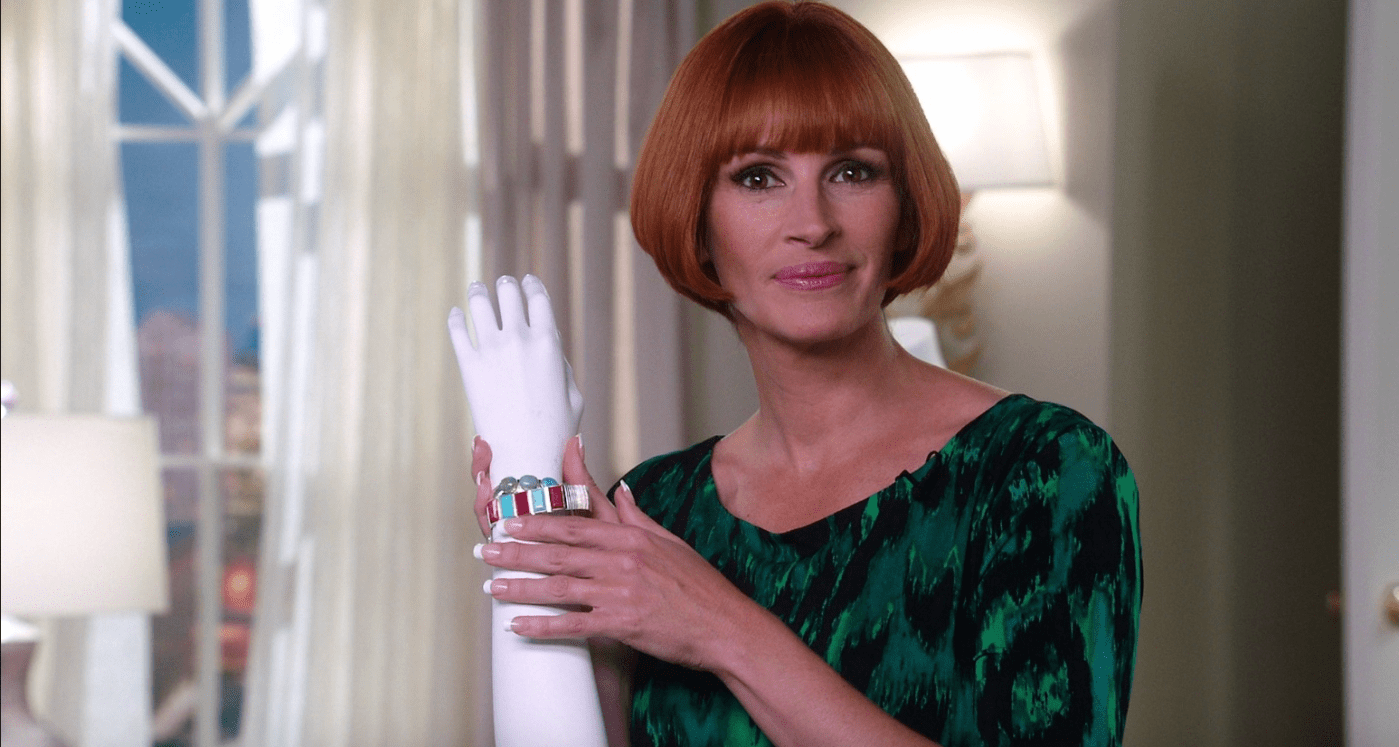
Kristin (Britt Robertson) and Zack (Jack Whitehall) are a young couple struggling to eke out a living as bartenders at a comedy club run by Jon Lovitz. Despite having a baby with Zack, Kristin repeatedly turns down his marriage proposals due to unresolved abandonment issues stemming from her having been adopted at birth. Her birth mother, Miranda (Julia Roberts), is a Martha Stewart-esque jewelry mogul currently in town (Atlanta, Georgia, by the way) to hawk her wares on the Home Shopping Network, which gives Kristin a prime opportunity for some closure. Finally, Bradley (Jason Sudeikis) is a recent widower with two teenage daughters struggling to find a way to observe their first Mother’s Day without mom (Jennifer Garner, seen briefly on video performing a tragically goofy karaoke number). Bradley suggests ignoring the holiday all together, because the wounds are still too fresh. This pisses off just about everyone in his orbit, including the weird Greek chorus of single ladies hovering around him at the gym that he manages.
Question Time / “Random Details I Couldn’t Fit in the Above Paragraphs” Time:
- What abandonment issues could a person adopted at birth possibly have, particularly when it’s carefully explained to us that Kristin lived out a wonderful childhood in Hawaii?
- Why would this stop Kristin from tying the knot with the person to whom she’s basically already married?
- Why would anyone decide to drive halfway across the country and just drop in on their estranged, adult children uninvited, assuming everything is suddenly fine?
- Do people seriously expect a widower to actually celebrate Mother’s Day when he’s clearly still grieving?
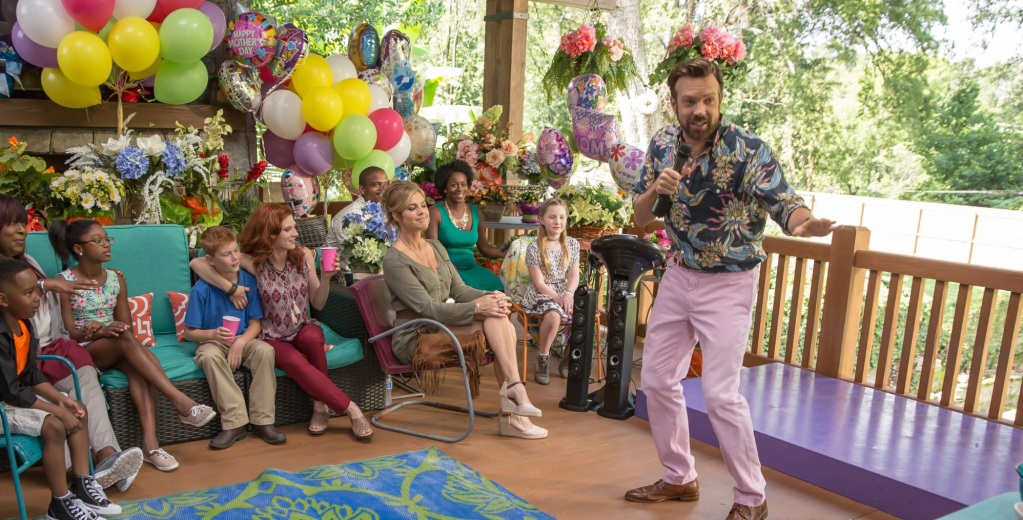
- Also, what do they expect him to do anyway? Throw a Mother’s Day party for his dead wife and invite everyone he knows? (Note: This is exactly what he does.)
- What the hell did Sandy do to the universe that all of these other stories intersect with her own and conspire to ruin her life?
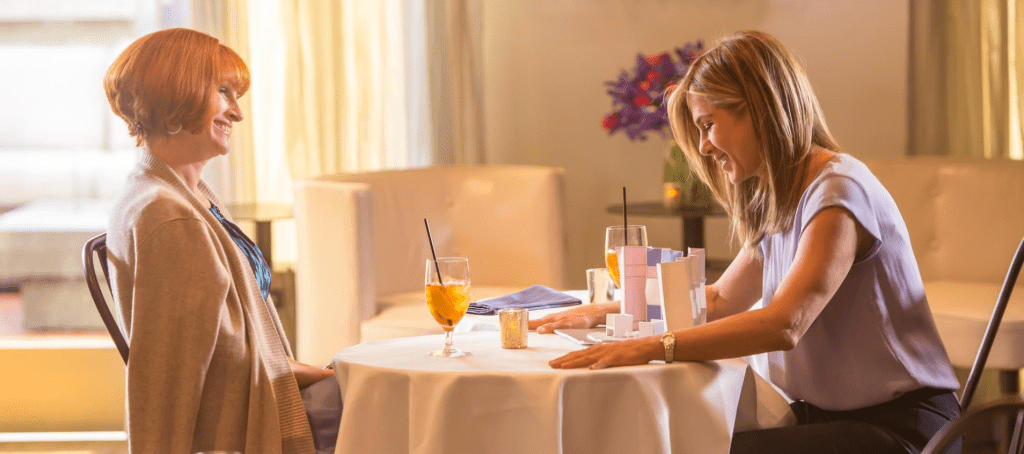
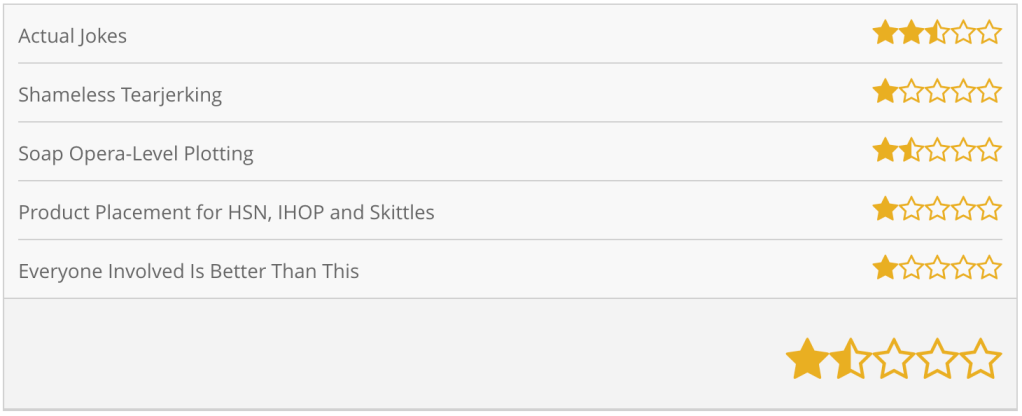
Now, I realize the answer to these questions is “Because human beings are emotionally complex creatures,” but for the purposes of Mother’s Day, the actual answer is “Because otherwise there would be no movie.” Most of the situations this movie presents are only problems because the movie calls them problems. Aside from Jennifer Aniston having a slow-motion meltdown over the course of two hours, none of these characters’ issues are things that can’t be hashed out over a couple of drinks. Kristin’s abandonment issues only manifest themselves when she announces to a crowded bar, “I have abandonment issues!” The sheer sitcom-ness of each of these stories is baffling, and I refuse to believe it took more than a single workday for three screenwriters to put it all together.
The loose, ramshackle script is a signpost for the entire film. Each individual scene feels like the Judd Apatow improv game version of an actual, scripted scene. The context of the plot seems to be all the actors had to go on in any given moment, leaving most exchanges full of pregnant pauses and loads of dead screentime. There’s one scene where Sandy has a heart-to-heart with a circus clown. The clown imparts some unexpectedly sage advice (“Don’t worry about your kids; they still love you.”), but all Jennifer Aniston can stammer out is, “Y…you’re a clown! Why am I talking to a clown?” Why indeed.
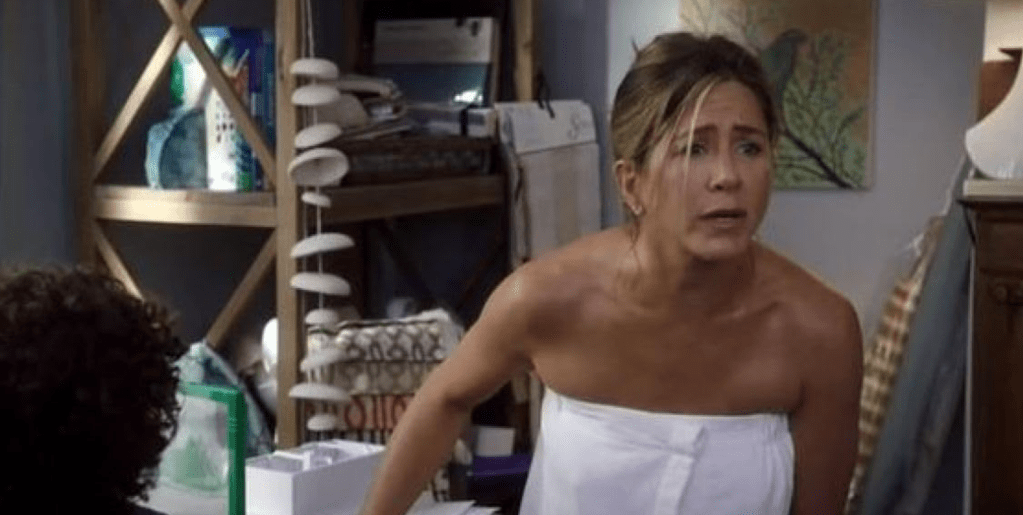
Someone in the editing room must have decided all of this awkwardness needed to stay in the film, because most of it is patched over with some cringingly bad off-camera dialogue. The above scene ends with Aniston turning her back to the camera with the line “That clown could’ve murdered me,” dubbed in after the fact. Elsewhere, after Bradley has an out-of-character temper tantrum at a soccer referee over his daughter’s team losing a match, the scene cuts away with the following exchange, presumably spoken by three of his daughter’s teammates:
“I can’t believe we lost…”
“I think the ball was deflated…”
“Tom Brady is hot…”
Timely sports references are fun, but you know what’s even more fun? Actual jokes told onscreen by actual characters. To that end, Zack’s entire subplot revolves around competing in a stand-up comedy competition at the bar where he works so that he can win money to support his newborn child. These scenes are about the only moments where anyone says anything even remotely funny, and once again, a main character is forced into an awkward situation where they fall ass-backwards into words of wisdom.
The only character who legitimately learns anything over the course of this film is Flo, who is straight up cured of her racism after accidentally video-chatting with her daughter’s Indian mother-in-law and realizing the two of them actually have a lot in common. In particular, they share a love of cold beer and slot machines, and also have awful children who keep secrets from them. (As a sidenote, I’ve never seen people actually video-chat on their laptops the way these people do, but it must be a real thing because people in movies do it all the goddamn time.) Anyway, Flo’s motherly instinct kicks in when she’s forced to look after Jesse and Russell’s son, and suddenly we don’t hate her quite so much anymore, because how on earth can you hate a grandma playing with a baby?
As clumsily executed and poorly produced as Mother’s Day is, it’s kind of appalling how hard it tries to tug at those heartstrings. The film periodically cuts in random shots of moms doing mom stuff, just to remind you of all the things your mom does for you. Moms hugging kids; moms bandaging scraped elbows; moms baking cookies… Mother’s Day is shamelessly, almost offensively, manipulative. There’s honestly nothing to recommend here, unless you enjoy being treated like a science experiment. If you shed a tear at the right moment, Garry Marshall will feed you a food pellet and then the test starts all over again. It’s insanity.
I love you, mom, but I am not taking you to see Mother’s Day.

Leave a comment