
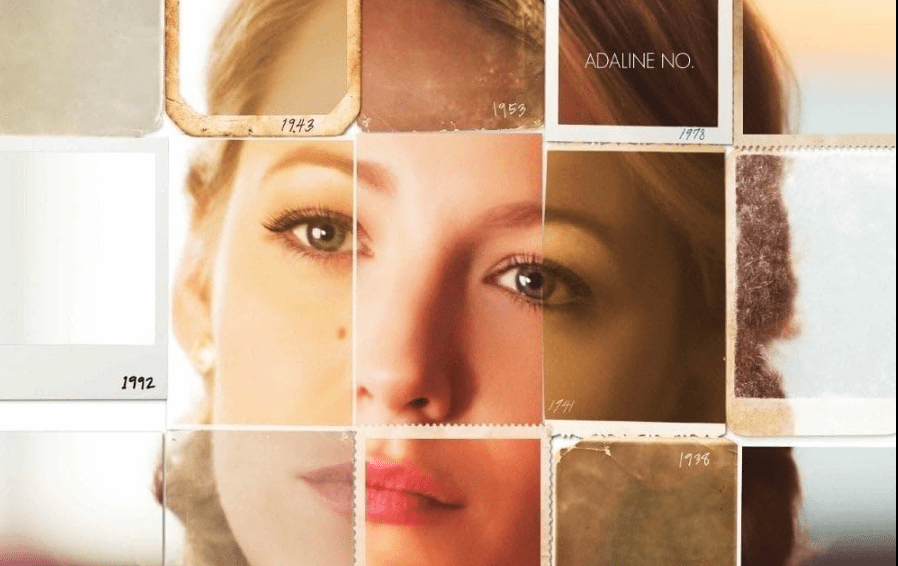
Originally published April 26, 2015 on FrontRowCentral.com
They don’t make movies like this anymore, but God love them, they keep trying. The Age of Adaline wants so badly to be a magical romance in the vein of Benjamin Button, but ultimately sets its sights much lower. And that’s okay! Not every film has to be a maudlin romance told across multiple decades and continents. This one tries to do just that, of course, and just like Benjamin Button, its reach far exceeds its grasp. Age of Adaline is a film that feels weirdly out of step with the modern cultural landscape. I wish I could tell you that’s the point, but I’m honestly not so sure.
In 1937, at the age of 29, Adaline Bowman (Blake Lively) dies in a car crash. Moments later, her body is struck by lightning. This brings her back to life, but with the improbable benefit of switching off the gene in her DNA that controls the aging process. (An Alec Baldwin soundalike narrates this technobabble faster and in greater detail than I could write it down, probably for that very reason.) The long and short of it is that Adaline thenceforth stops aging at 29, and is forced to periodically go into hiding so as not to raise the suspicions of the scientific community and/or the FBI. Ruminate on that one for a while, because the film sure as hell doesn’t.
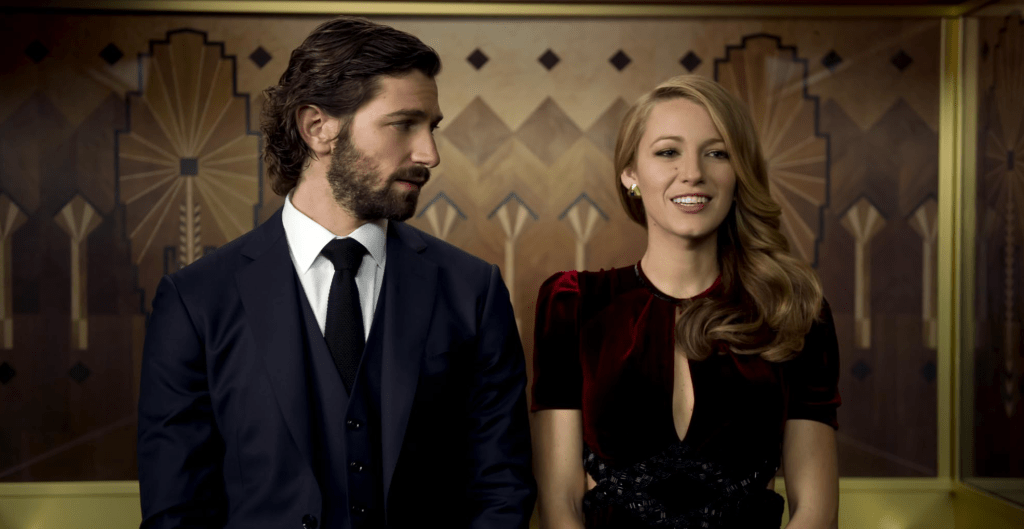
In other words, Adaline cares little for the science of Adaline’s condition, but for as much time as the script wastes explaining it, calling it magic seems wrong as well. The gimmick really only exists to establish Adaline as a woman out of time, allowing Blake Lively to try out various fashions over the decades and, frankly, nailing every single one of them. (Check out all of the movie’s poster if you don’t believe me.) When we first meet Adaline on New Year’s Eve, 2014, she is 106 years old, yet appears as youthful and energetic as she was in her 20s. Lively plays Adaline as vaguely wistful, perhaps a bit world-weary, but not like a person who’s lived for a century and change. If we’re meant to feel her age, it doesn’t read that way. Adaline comes across as immortal, and also embarrassed by the fact. Not that it matters. She could be a time-traveler and it wouldn’t affect the outcome of the story one bit.
After establishing all of this narrative and emotional baggage, Adaline finally gets down to the business of its story, which finds Adaline working at the San Francisco public archive. There, she meets a young entrepreneur named Ellis (Michiel Huisman), who pursues her by donating numerous first edition books from his personal collection. She rejects his initial advances but, after consulting her 80-year-old daughter (Ellen Burstyn), decides maybe now is the time for a relationship. When Ellis takes her home to meet his parents, his father William (Harrison Ford) is utterly flabbergasted, having once courted Adaline himself back in the ‘60s.
There’s an issue of perspective concerning this film that I find myself having a hard time reconciling. Adaline feels like a holdover from an era when superheroes and science fiction didn’t rule the roost. It is blissfully unaware of films like The Lazarus Effect, where a light application of pseudoscience and electricity can yield pretty much anything. Our collective imagination takes this stuff for granted nowadays, so for Adaline to belabor a point like lightning stopping a woman from aging comes across more than a bit naïve. We don’t need this explained to us so profusely; not when everyone and their grandma watches shows that deal in the supernatural every single week.
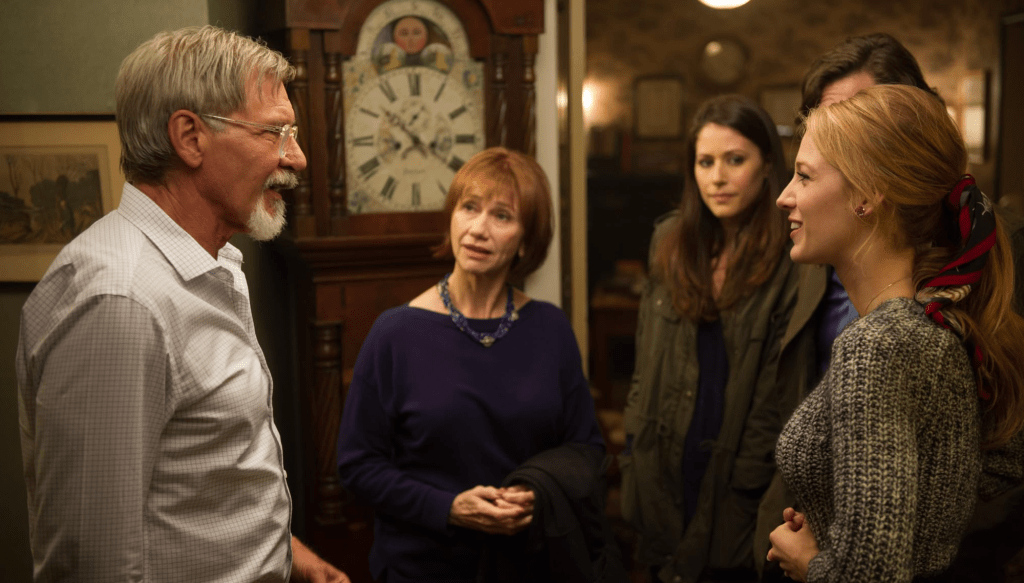
The truth is, this wasn’t necessarily made for the FRC crowd. This is a film for your aunts and uncles to see on date night and then say “That could really happen, you know,” at the next family barbecue. And that’s fine. Everyone deserves a fantasy that moves at their own speed. Personally, Adaline feels to me like a 30-minute short film stretched to its two-hour breaking point by a sometimes obnoxious overuse of flashbacks. That said, those flashbacks are photographed and staged with a sort of Old Hollywood warmth that makes the present look lifeless and dull by comparison. This, too, was almost certainly by design, but if that’s the case, it suggests the film is just as bored with its story as we are.
I’m conflicted on this one. On the one hand, Adaline’s predicament is a fascinating one. If you were forever frozen in the prime of your life, how would you use that time? What would you dedicate yourself to? Adaline certainly appears to have made good use of her time, but the film doesn’t seem particularly interested in any of this. On the other hand, the dual love stories that the film commits to are so thinly detailed that neither one really connects. There is certainly still a place for old-fashioned, sepia-toned romances like The Age of Adaline, but in 2015, a little perspective would do Hollywood’s romantics a world of good.


Leave a comment